Equip-Link Equip-Link

Why Choose a 10G SFP+ Transceiver for Your Network?

Time:2026-10-03 Author:Amelia
0%

Why Choose a 10G SFP+ Transceiver for Your Network?

Network traffic keeps growing, and older links can become hidden bottlenecks. Cisco’s Annual Internet Report, 2018–2023, projected 5.3 billion internet users and 29.3 billion connected devices by 2023. Those figures show why network capacity deserves careful planning, even in smaller enterprises.

A 10G SFP+ transceiver delivers up to 10 gigabits per second through a compact, replaceable interface. It can connect switches, servers, storage systems, and uplinks without replacing an entire platform. With multimode fiber, organizations can support short data-center connections. Single-mode fiber can extend links across buildings or campuses. Direct-attach copper may also reduce cost over very short distances. The right choice depends on distance, optics, switch compatibility, and temperature conditions.

Power matters.

The Ethernet Alliance describes 10GbE as a mature and widely deployed Ethernet option in its Ethernet Roadmap. IDC’s Worldwide Ethernet Switch Tracker also continues to treat 10GbE as an important switching segment. These industry perspectives support its practical value, but they do not make every module suitable for every network. Check vendor coding, wavelength, connector type, and digital diagnostics before installation. A mismatched transceiver may create unstable links, not immediate failure.

A 10G SFP+ transceiver is not a magic upgrade. It cannot fix poor cabling, oversubscribed uplinks, or weak monitoring. Still, it offers a balanced path between basic Gigabit Ethernet and more expensive 25GbE or 40GbE designs. For many teams, that balance means faster backups, smoother virtualization, and room for growth. The decision should follow measured traffic, not assumptions.
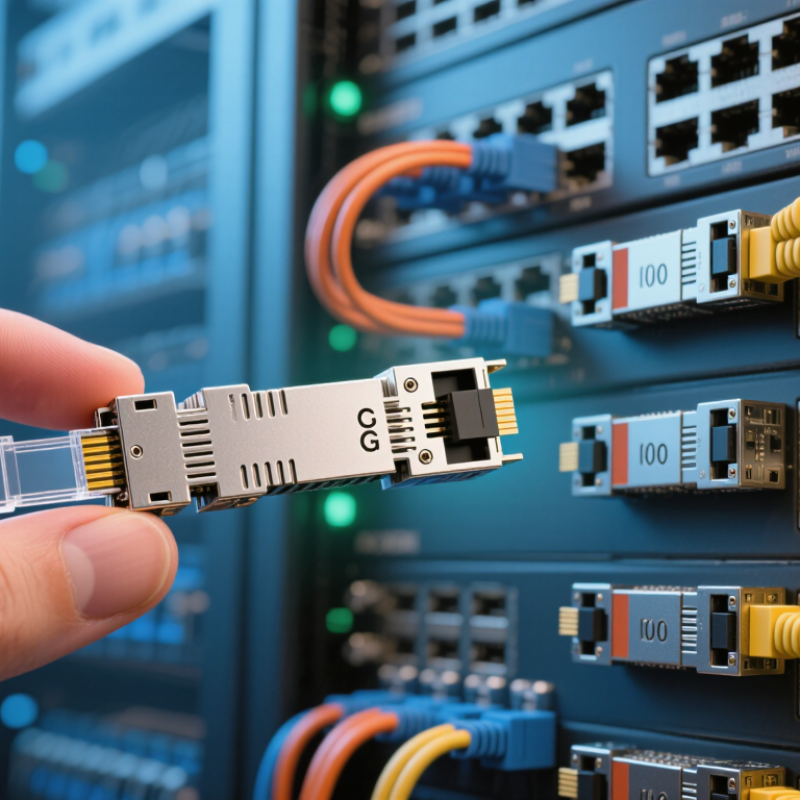
Why Choose a 10G SFP+ Transceiver for Your Network?

What Is a 10G SFP+ Transceiver?

A 10G SFP+ transceiver is a small, pluggable device that connects network equipment through a 10-gigabit link. It converts electrical signals from a switch or network card into optical or copper signals. The module fits into an SFP+ port, while the attached cable carries data to another device. Fiber versions commonly use duplex LC connectors, and copper versions use twisted-pair cabling. The correct choice depends on distance, cable type, port support, and operating conditions.

In practical network installations, engineers check wavelength and transmission distance before ordering modules. A short data-center connection may need only a few meters of direct-attach cable. A longer building link may require single-mode fiber and a suitable optical module. Speed alone is not enough. Two 10G modules can use different wavelengths or fiber types, making them unsuitable for the same link. Port compatibility, supported coding, power consumption, and digital diagnostics also deserve attention.

A reliable installation includes clean connectors, correct polarity, and link testing at both ends. Dust can create surprising signal loss. Heat matters too, especially in crowded switch cabinets with limited airflow. The label may promise 10G, but real performance depends on the complete path. I once treated the transceiver as the main decision; that was incomplete. Cable quality, port firmware, and distance can matter just as much. A careful compatibility check prevents expensive trial and error.

How 10G SFP+ Transceivers Work in Network Systems

Why Choose a 10G SFP+ Transceiver for Your Network?

How 10G SFP+ Transceivers Work in Network Systems

A 10G SFP+ transceiver connects a network switch, server, or router to a high-speed link. It receives electrical data from the host device. Then, it converts that data into optical or electrical signals. The receiving transceiver performs the reverse conversion. This process happens continuously, with signals moving through fiber or direct-attach copper cables.

Optical versions use a laser transmitter and a photodetector. Single-mode fiber supports longer distances, while multimode fiber suits shorter connections inside facilities. Copper direct-attach cables usually work well for nearby devices and can reduce installation complexity. Both endpoints need compatible speeds, connector types, and transmission distances. Small mismatches can create packet errors or unstable links.

In real deployments, cleanliness matters. Dust on a fiber connector can weaken the signal noticeably. Heat can also affect module stability inside crowded racks. Monitoring tools may report temperature, voltage, and optical power, but these readings need careful interpretation. A low reading does not always indicate immediate failure. Sometimes, the cable is the problem.

Tips

Check the device compatibility list before purchasing. Match fiber type, wavelength, distance, and connector style. Clean connectors with approved tools. Label both ends of every cable. Test the link under realistic traffic, not only during idle periods. I have found that simple cable records prevent many later mistakes. Still, specifications alone cannot predict every site condition. Viewing the transceiver as part of the complete link is more reliable.

Key Benefits of Choosing 10G SFP+ Connectivity

Why Choose a 10G SFP+ Transceiver for Your Network?

Key Benefits of Choosing 10G SFP+ Connectivity

In real network upgrades, 10G SFP+ connectivity offers a practical balance between speed, flexibility, and manageable cost. It supports data rates up to 10Gbps, helping servers, switches, and storage systems handle heavy traffic with less congestion. Its compact form also leaves room for future connections inside crowded racks. Small module, serious capacity.

The connection medium can match the installation. Fiber modules support longer links between rooms or buildings, while direct-attach cables suit short rack connections. This choice can reduce unnecessary cable costs and simplify maintenance. Many installations also benefit from lower latency than slower copper links. However, performance depends on compatible ports, suitable optics, and correct fiber types. I have seen upgrades fail because engineers checked speed but ignored reach.

Reliability requires more than plugging in a transceiver. Check operating temperature, transmission distance, connector type, and device compatibility before deployment. Digital monitoring can help technicians observe temperature, voltage, and optical power when supported by the hardware. Clean connectors matter too; one dusty end can create unstable links and repeated alarms. A careful test with an optical meter is worthwhile. Still, no design is perfect, and future traffic growth may expose today’s comfortable capacity sooner than expected. Leaving spare ports and documenting every link creates a more dependable network.

Types of 10G SFP+ Transceivers and Their Applications

Why Choose a 10G SFP+ Transceiver for Your Network?

10G SFP+ transceivers support fast uplinks without replacing an entire switch. The right type depends on distance, fiber, and operating conditions.

10GBASE-SR

10GBASE-SR models use multimode fiber for short links, often within server rooms. They commonly support about 300 meters over OM3 fiber. OM4 fiber may extend this distance further. These modules suit data center racks and building-floor connections.

10GBASE-LR and ER

For longer routes, 10GBASE-LR transceivers use single-mode fiber and typically reach up to 10 kilometers. They fit campus networks, metropolitan links, and connections between separate facilities. ER models can reach much farther, but exact limits depend on fiber quality and optical loss.

BiDi Transceivers

BiDi transceivers send and receive signals through one fiber strand. They require matched wavelength pairs. That detail is easy to overlook.

Copper SFP+ modules work with twisted-pair cabling over shorter distances, while active optical cables simplify fixed rack connections.

Field testing often exposes small issues, such as dirty connectors, incorrect wavelengths, or unsupported module coding. Check the switch documentation before installation.

Confirm speed settings, digital optical monitoring, temperature ratings, and connector type.

A link may appear stable during testing, then fail under heat or heavy traffic. That possibility deserves attention.

Some specifications also vary between manufacturers, so published distance figures should not replace an actual link budget.

How to Select the Right 10G SFP+ Transceiver for Your Network

Why Choose a 10G SFP+ Transceiver for Your Network?

Selecting a 10G SFP+ transceiver starts with distance, fiber type, and switch compatibility. The IEEE 802.3 standard rates 10GBASE-SR for up to 300 meters over OM3 fiber. With OM4, the reach can extend to 400 meters. For longer links, 10GBASE-LR supports up to 10 kilometers over single-mode fiber. These figures matter in real deployments. A short server-room link does not need the cost of a long-distance optic.

Check the switch port, wavelength, connector, and operating temperature. The 2024 Ethernet Alliance roadmap identifies 10GbE as an established speed for enterprise and data-center networks. A global networking forecast also estimated 29.3 billion connected devices by 2023, showing why predictable bandwidth and careful port planning remain important. Yet compatibility tables can be incomplete. Test the transceiver with the actual switch, fiber patch cord, and monitoring system before full installation.

Watch the details.

Choose a coded, standards-compliant module when network management requires identification. Confirm the required optical budget, not only the advertised distance. Dust, tight bends, and mismatched fiber can reduce stability. I have seen a link pass initial testing, then fail during temperature changes. That is easy to overlook. A practical choice balances reach, diagnostics, power consumption, and future capacity rather than selecting the lowest price.

FAQS

What does a 10G SFP+ transceiver do?

It converts electrical data into optical or electrical signals. The receiving module converts them back continuously.

Which fiber type suits short 10G connections?

Multimode fiber suits shorter links, especially inside server rooms. OM3 fiber commonly reaches about 300 meters.

When should single-mode fiber be used?

Single-mode fiber fits longer routes between buildings or facilities. Long-range versions typically support distances up to 10 kilometers.

What are BiDi transceivers?

BiDi transceivers send and receive signals through one fiber strand. They require matched wavelength pairs.That detail is easy to miss.

Can copper SFP+ modules replace fiber connections?

Copper modules suit nearby devices using twisted-pair cabling. They can simplify short rack connections.

Why might a 10G link become unstable?

Dirty connectors, heat, incorrect wavelengths, or unsupported module settings can weaken stability. Heavy traffic may reveal hidden problems.

How should fiber connectors be maintained?

Clean connectors with approved tools before installation. Dust can noticeably weaken optical signals.Handle them carefully.

What should be checked before purchasing a transceiver?

Check device compatibility, fiber type, wavelength, distance, connector style, temperature rating, and monitoring support.Specifications help, but they are not everything.

How can network teams reduce installation mistakes?

Label both cable ends and keep simple connection records. Test links under realistic traffic, not only idle conditions.I still find records surprisingly useful.

Conclusion

A 10G SFP+ transceiver is a compact, hot-swappable networking component designed to transmit and receive data at speeds of up to 10 gigabits per second over fiber or copper connections. It converts electrical signals into optical signals, or the reverse, allowing switches, routers, servers, and other network devices to communicate efficiently. By supporting high bandwidth, low latency, and flexible installation, it is well suited to data centers, enterprise networks, storage systems, and high-performance computing environments.

Choosing the right 10G SFP+ transceiver can improve network scalability, reliability, and cost efficiency. Different types support various transmission distances, cable media, wavelengths, and operating conditions, making them suitable for short-range connections, long-distance links, or specialized deployments. Before selecting a module, network administrators should consider transmission distance, fiber type, connector compatibility, device support, power consumption, environmental requirements, and future expansion plans. A careful match between the transceiver and network equipment helps ensure stable performance and long-term connectivity.

Amelia

Amelia

Amelia is a seasoned marketing professional with a wealth of expertise in our company’s core offerings. With an unwavering passion for driving growth and innovation, she plays a pivotal role in shaping our marketing strategies and enhancing brand visibility. A key aspect of her responsibilities......