Equip-Link
Equip-Link
Equip-Link
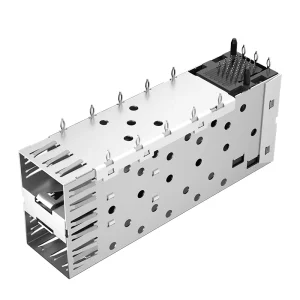
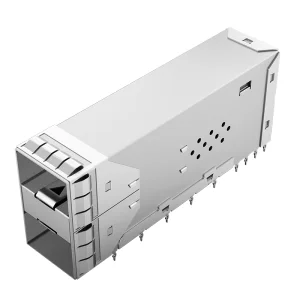
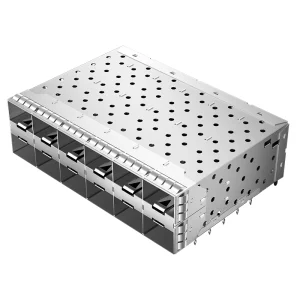
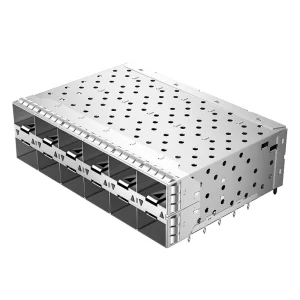
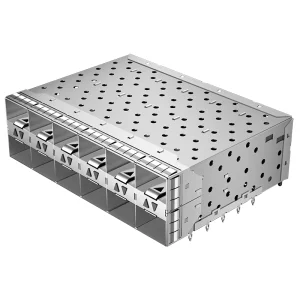
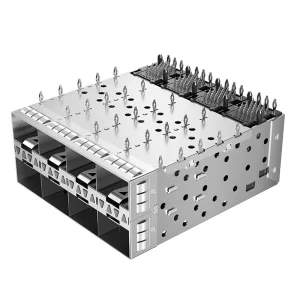
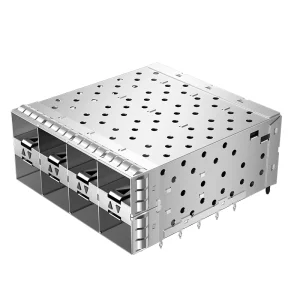
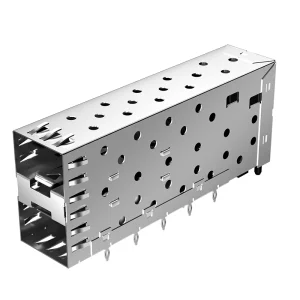
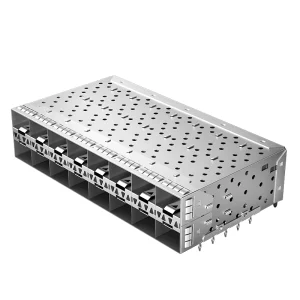
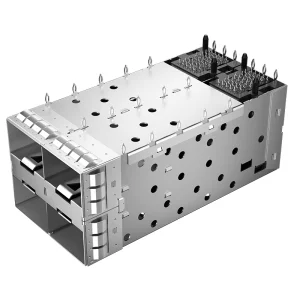
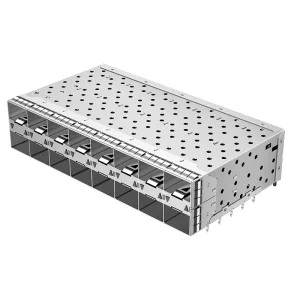
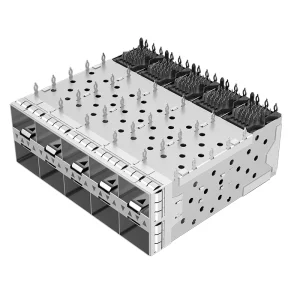
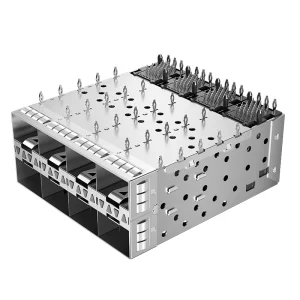
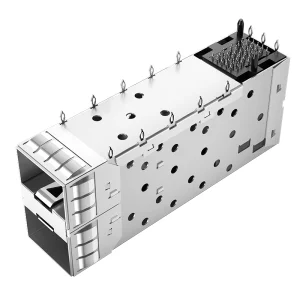
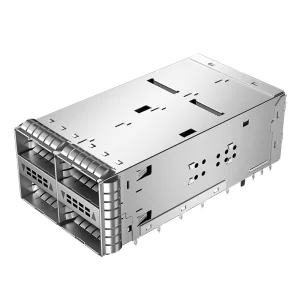
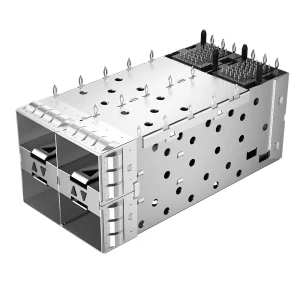
In high-density telecommunication systems and hyperscale computing environments, optimizing board real estate while maintaining high-speed signal integrity is a critical parameter. The SFP Cage 2xN (Stacked Ports) configuration addresses this challenge by stacking two rows of Small Form-factor Pluggable (SFP) receptacles vertically (the top row facing upward and the bottom row facing downward, or vice versa, often integrated into a single unified housing). The "2xN" nomenclature indicates two levels of height with 'N' horizontal columns (e.g., 2x1, 2x2, 2x4, 2x6, 2x8, or more), enabling port-density optimization on host PCBs.
Modern stacked SFP cages rely heavily on press-fit (compliant pin) technology. Unlike traditional Surface Mount Technology (SMT), press-fit connectors utilize "eye-of-the-needle" pins. This mechanical configuration allows elastic deformation during insertion into plated-through holes (PTH) on the host PCB. This provides high mechanical retention forces and consistent electrical connectivity without thermal stress, cold solder joints, or flux contamination. The pitch alignment and layout configuration (such as the 240-pin layout for 2x6 ports or 320-pin layouts for 2x8 configurations) ensure stable force distribution across the board during assembly.
Operating speeds of 10 Gbps (SFP+), 25 Gbps (SFP28), and newer iterations demands rigorous Electromagnetic Interference (EMI) containment. Standard 2xN stacked designs implement custom EMI spring fingers or conductive elastomeric gaskets that make contact with the panel cutout. Internally, segmented shielding walls compartmentalize the columns and rows to prevent port-to-port crosstalk. Lower-frequency EMI is absorbed, while high-frequency radiation is grounded through dedicated grounding pins interspersed between the high-speed signal pathways.
Standard stacked configurations optimized for historical telecom networks and gigabit switches. Focuses on robust mechanical coupling, standard light-pipe paths, and basic elastomeric EMI gaskets. Widely deployed in enterprise edge infrastructure.
Designed for ultra-high-speed NRZ transmission. Features improved signal integrity (SI) profiles with low-loss dielectric housings. Integrates precision-engineered light pipes (LED pathing) and complex internal ground shields to limit insertion loss and reflections at high frequencies.
The bleeding-edge interface supporting PAM4 modulation schemes. Demands complex impedance control (typically 100Ω ± 5Ω) and ultra-flat coplanarity to prevent signal degradation. Incorporates advanced, custom thermal heatsinks directly attached to the cage chassis.
The roadmap for SFP 2xN cages continues to evolve, adapting to the thermal and density challenges presented by hyperscale artificial intelligence (AI) computing arrays and 800G/1.6T backbone networks. As bandwidth requirements escalate, modern 2xN architectures transition to QSFP, QSFP-DD, and OSFP structures, while maintaining backward mechanical optimization principles that we have pioneered in our manufacturing setups.
Our engineered stacked cages are not merely static metal boxes; they are integral parts of high-performance networking architectures. Below are the critical ecosystems where our 2xN ports are deployed:
Deploying 2x6 and 2x8 SFP+ / SFP28 stacked configurations allows switch manufacturers to pack up to 48 ports in a single 1RU space, doubling port density without increasing rack height requirements.
Core networks rely on robust, press-fit assemblies to withstand thermal cycling and vibration. Our cages are built to comply with Telcordia requirements, ensuring stable long-term network reliability.
Compact form factors at the network edge require highly efficient EMI shielding and integrated light pipes to display diagnostic states in remote, harsh environmental conditions.
Founded in 2017, Equip-Link Intelligent Equipment (Shenzhen) Co., Ltd. is a leading manufacturer and supplier of high-performance optical transceivers and fiber optic communication solutions. We specialize in the design, development, production, and global distribution of optical modules for data centers, telecommunications networks, enterprise networking, cloud computing, and AI infrastructure applications.
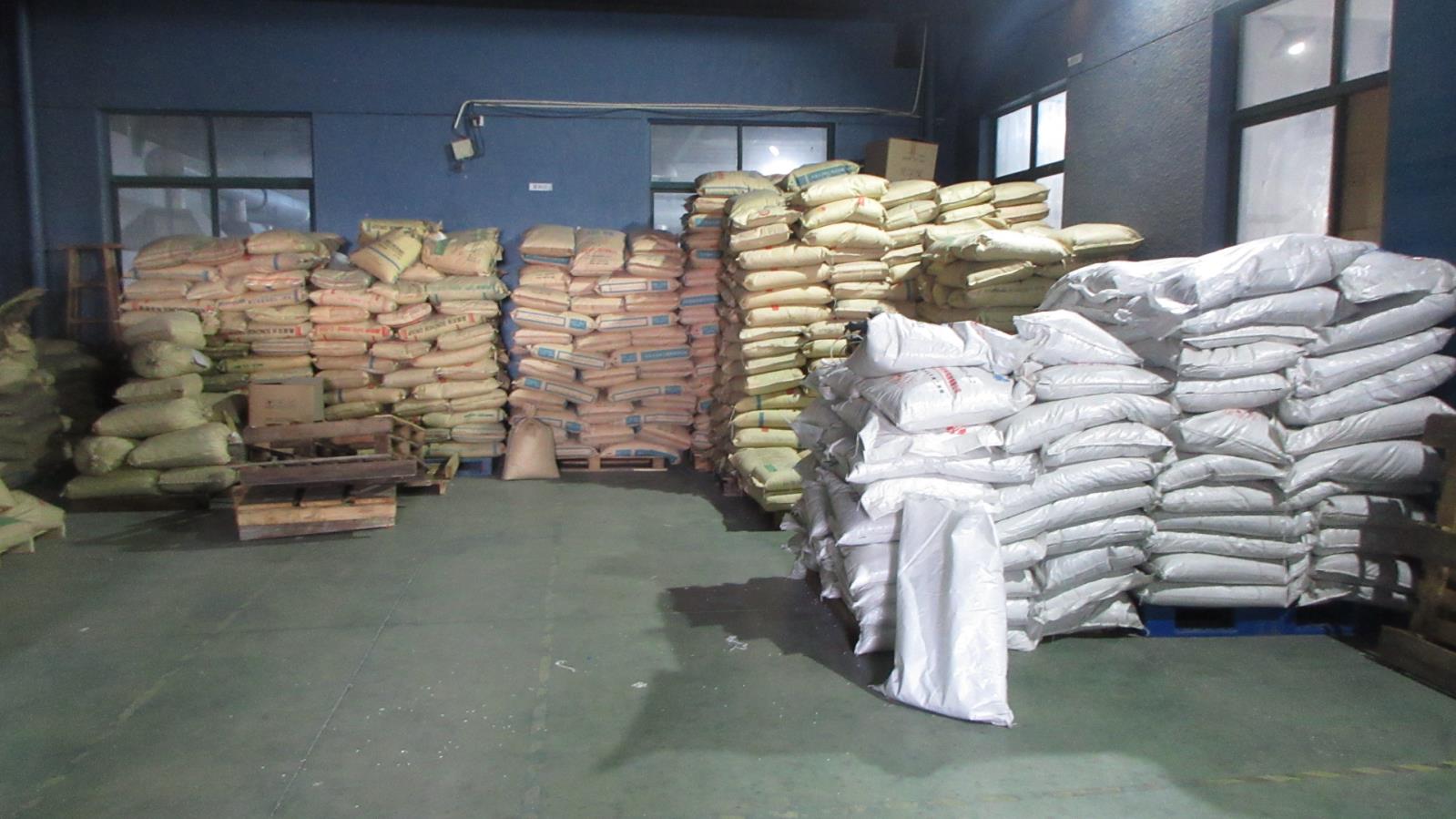
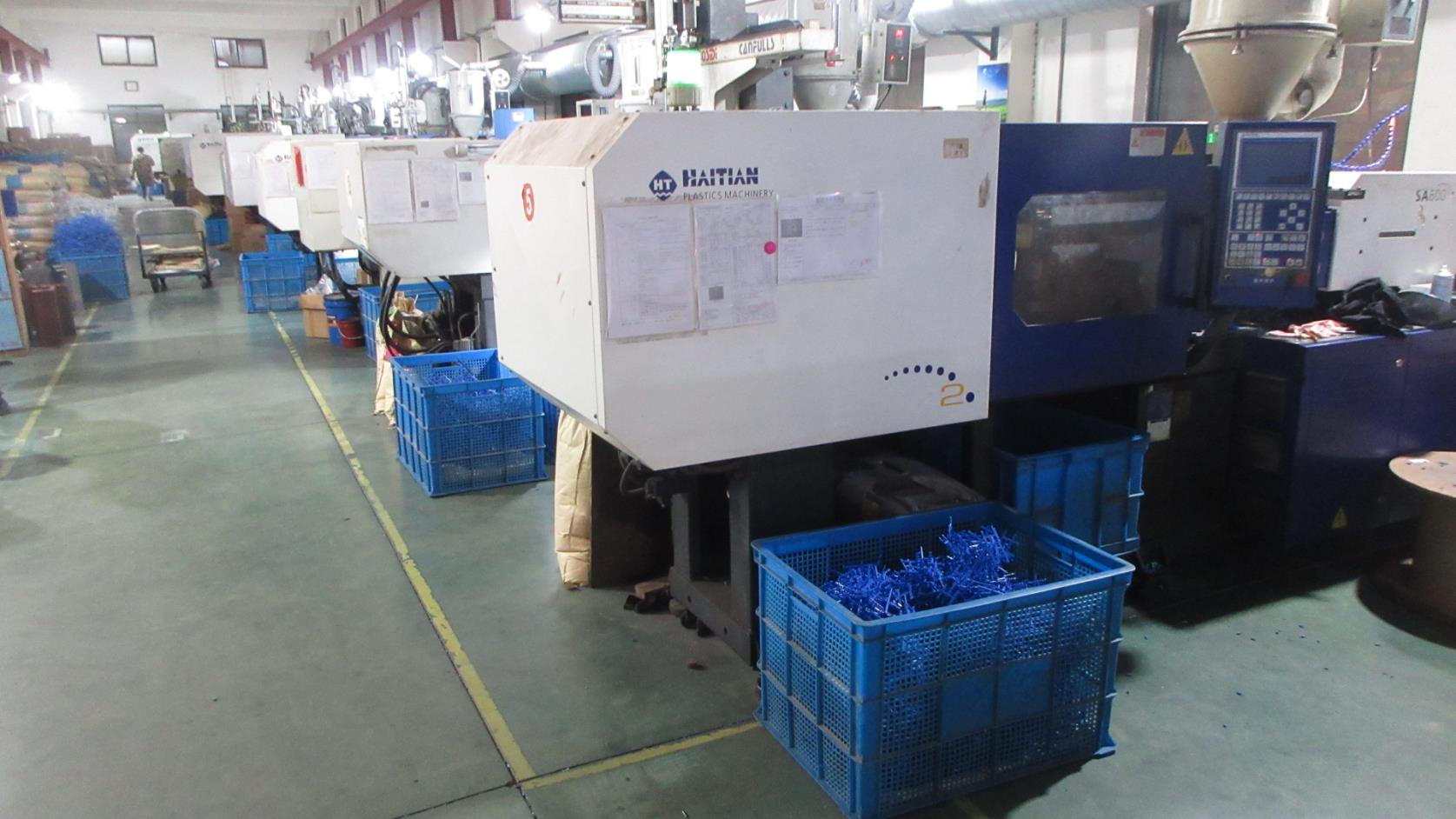
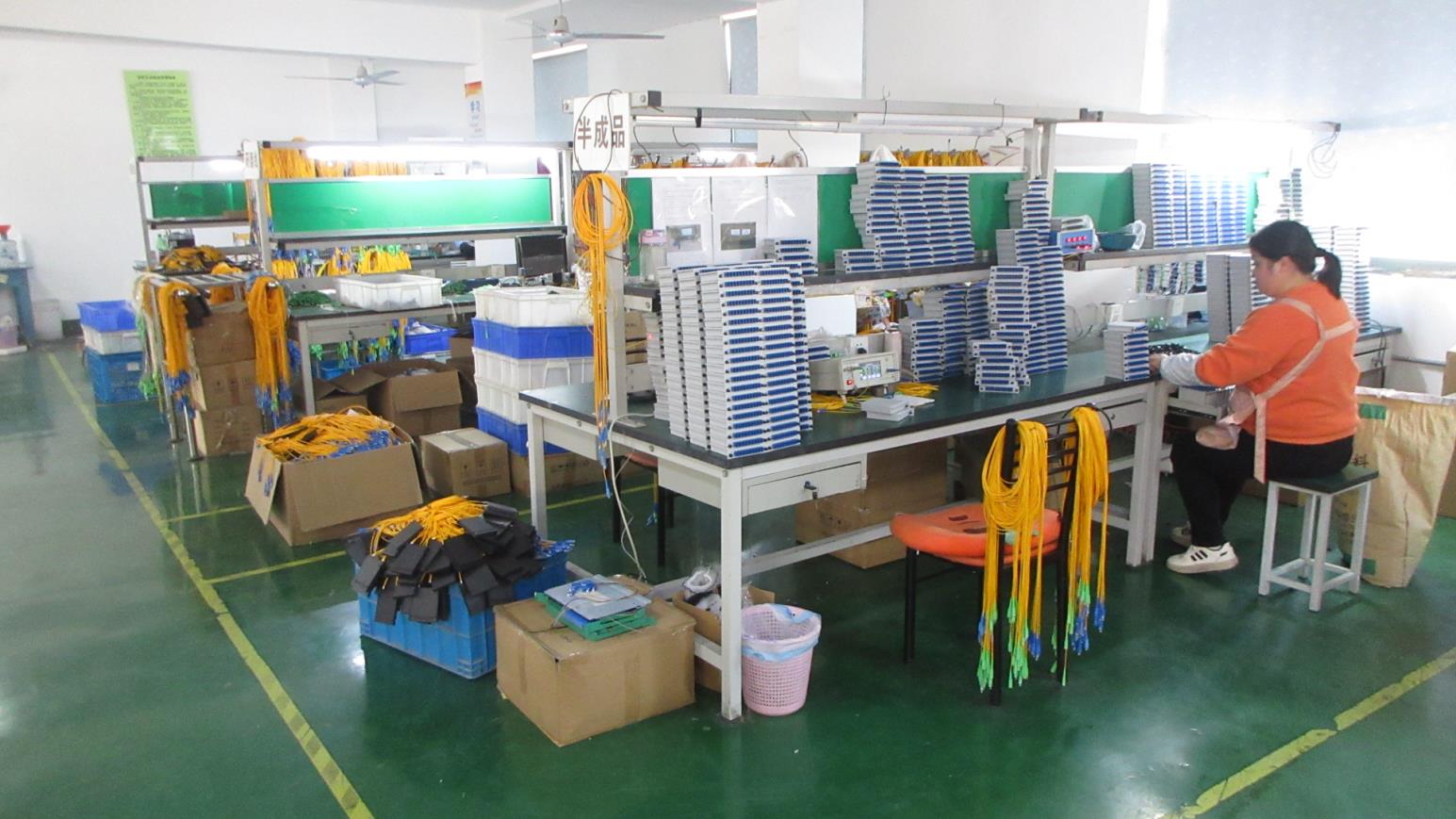
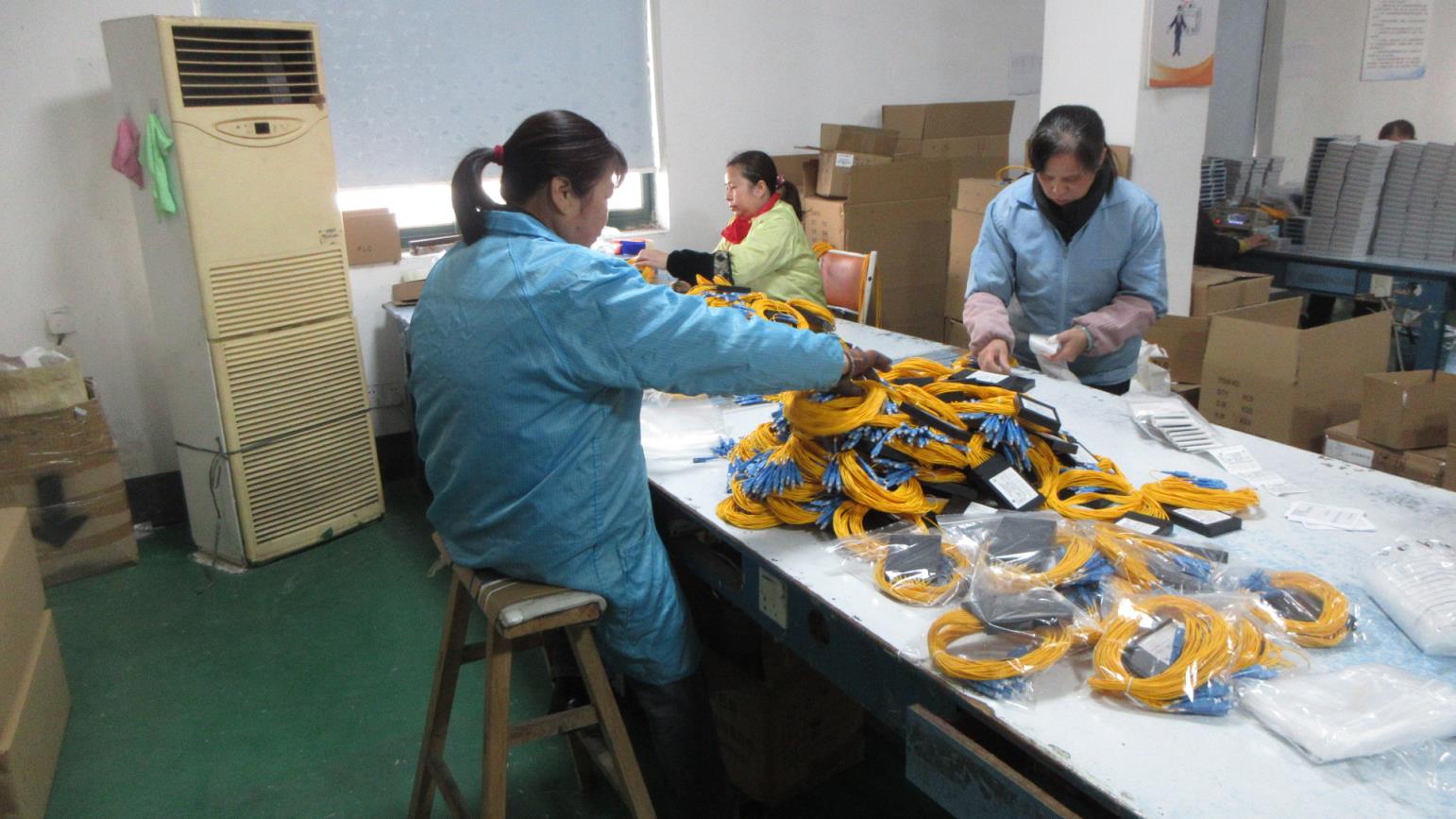
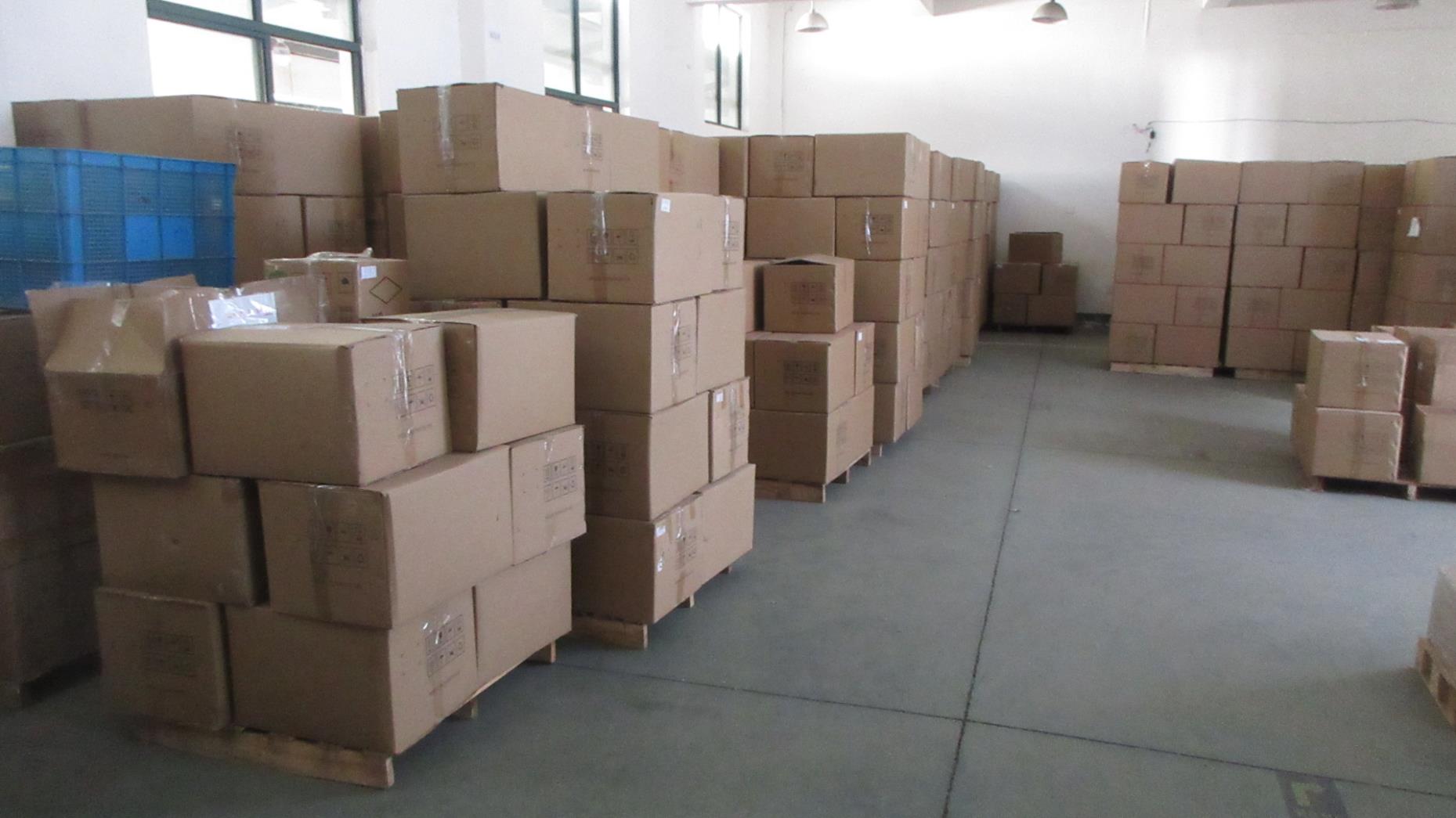
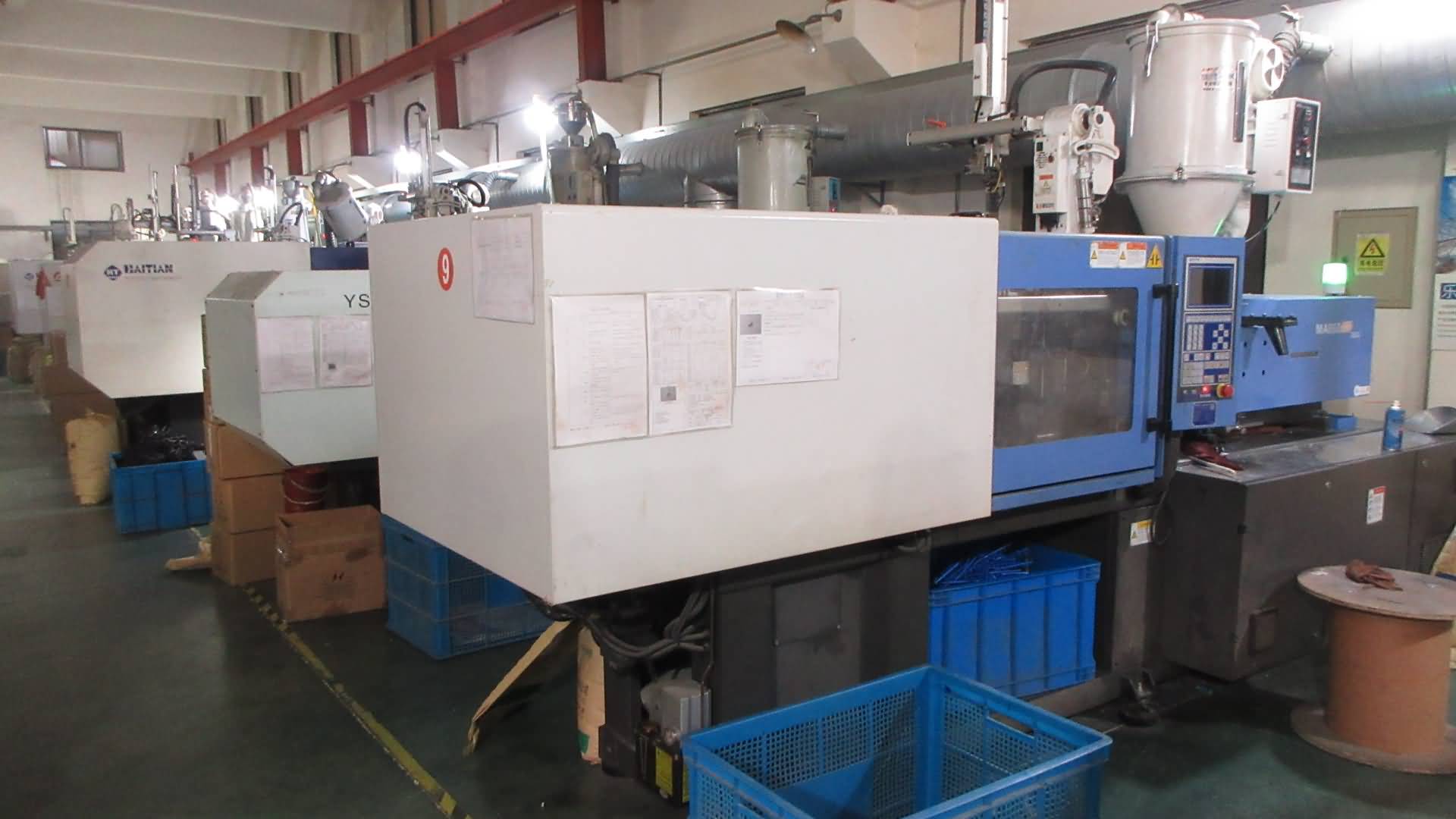
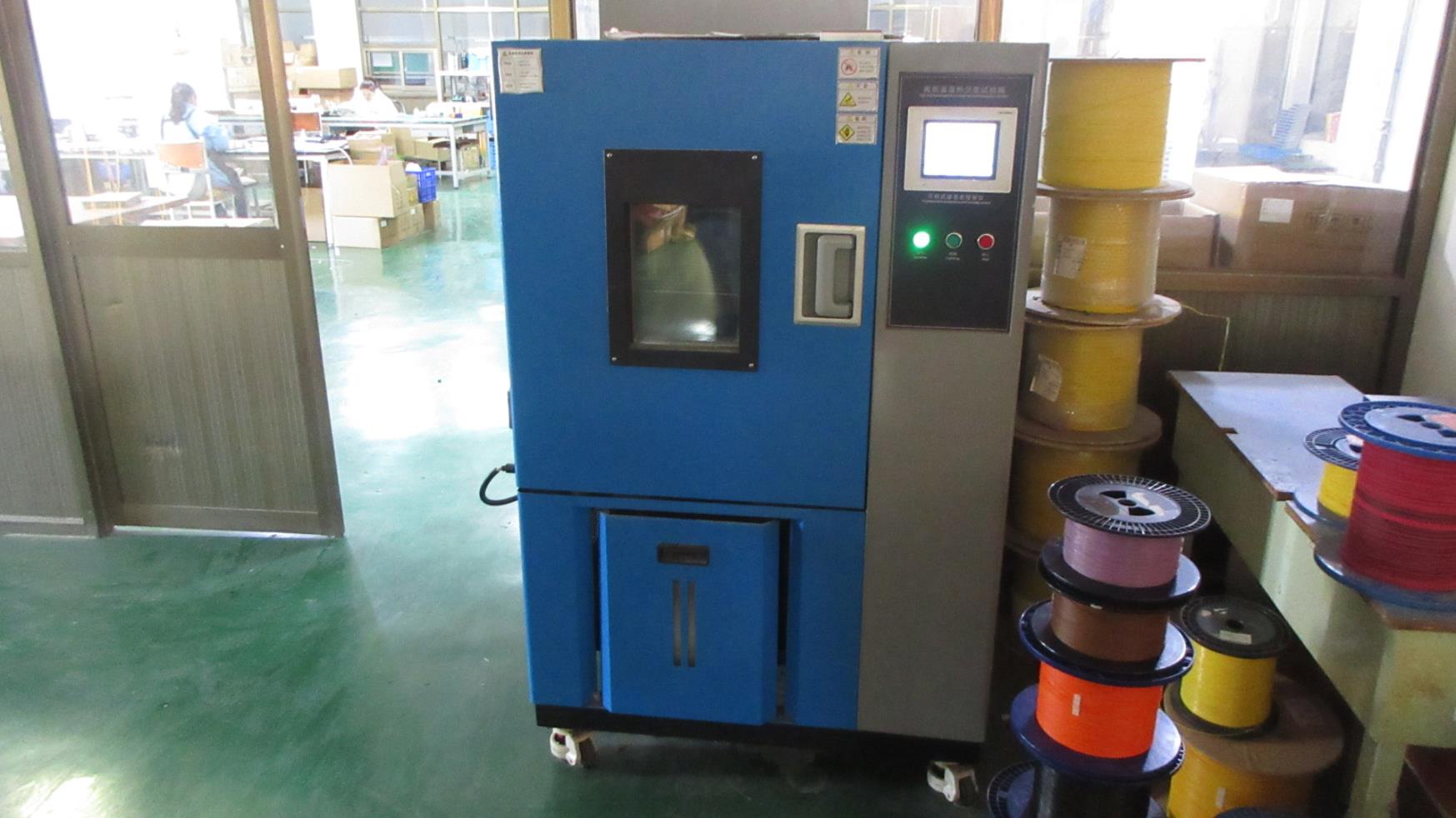
Our modern manufacturing facility covers an area of 380 square meters and is equipped with advanced production and testing equipment to ensure consistent quality and reliable performance. With an annual export revenue exceeding USD 18 million, Equip-Link has established long-term partnerships with customers in more than 50 countries and regions worldwide. With 9 years of export experience and 14 years of industry expertise, our team understands the evolving demands of global communication networks and delivers products that meet international standards for performance, compatibility, and reliability.
Industry Expertise
Annual Export Revenue
Qualified Supply Chain Partners
R&D Professional Engineers
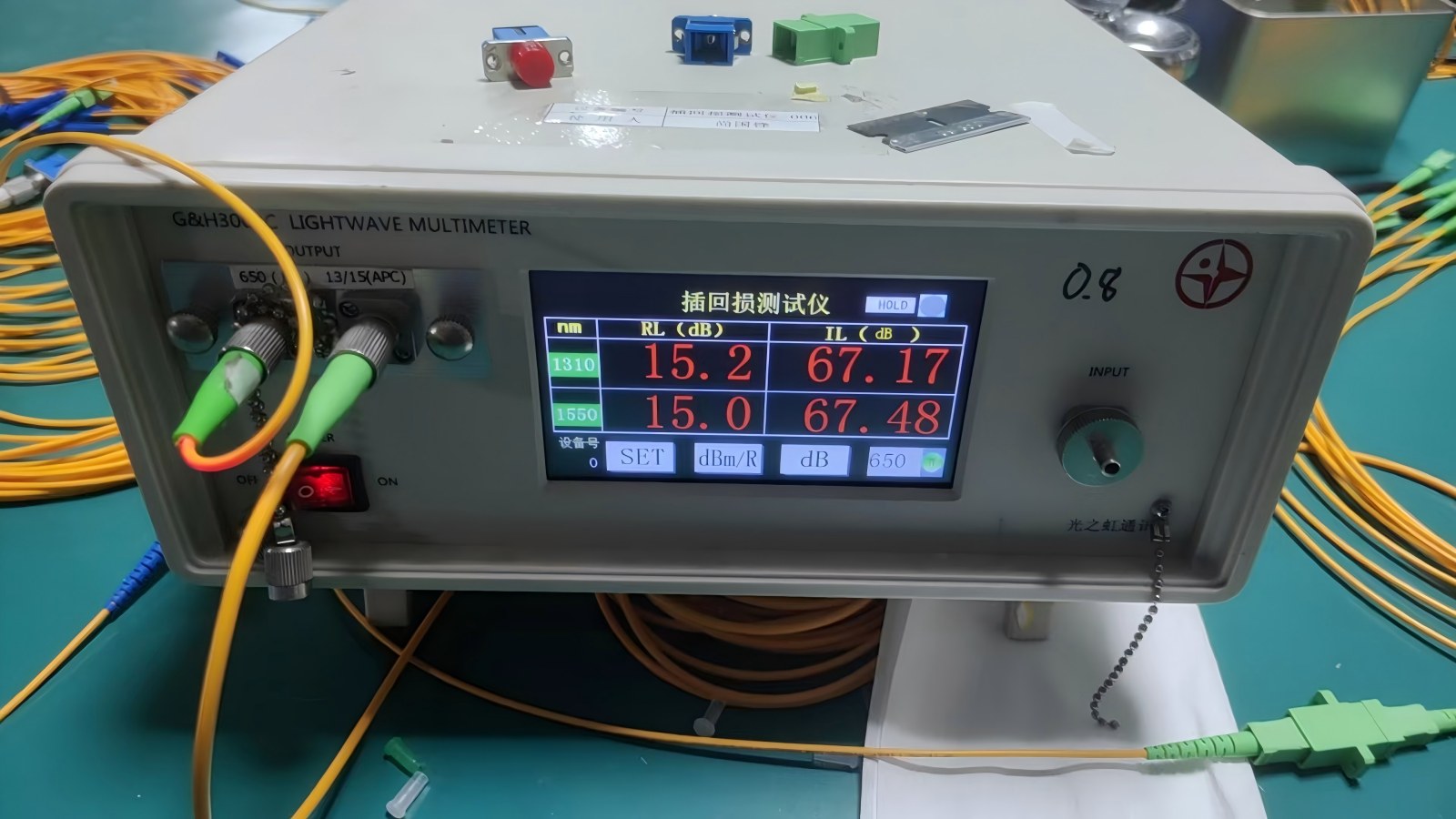
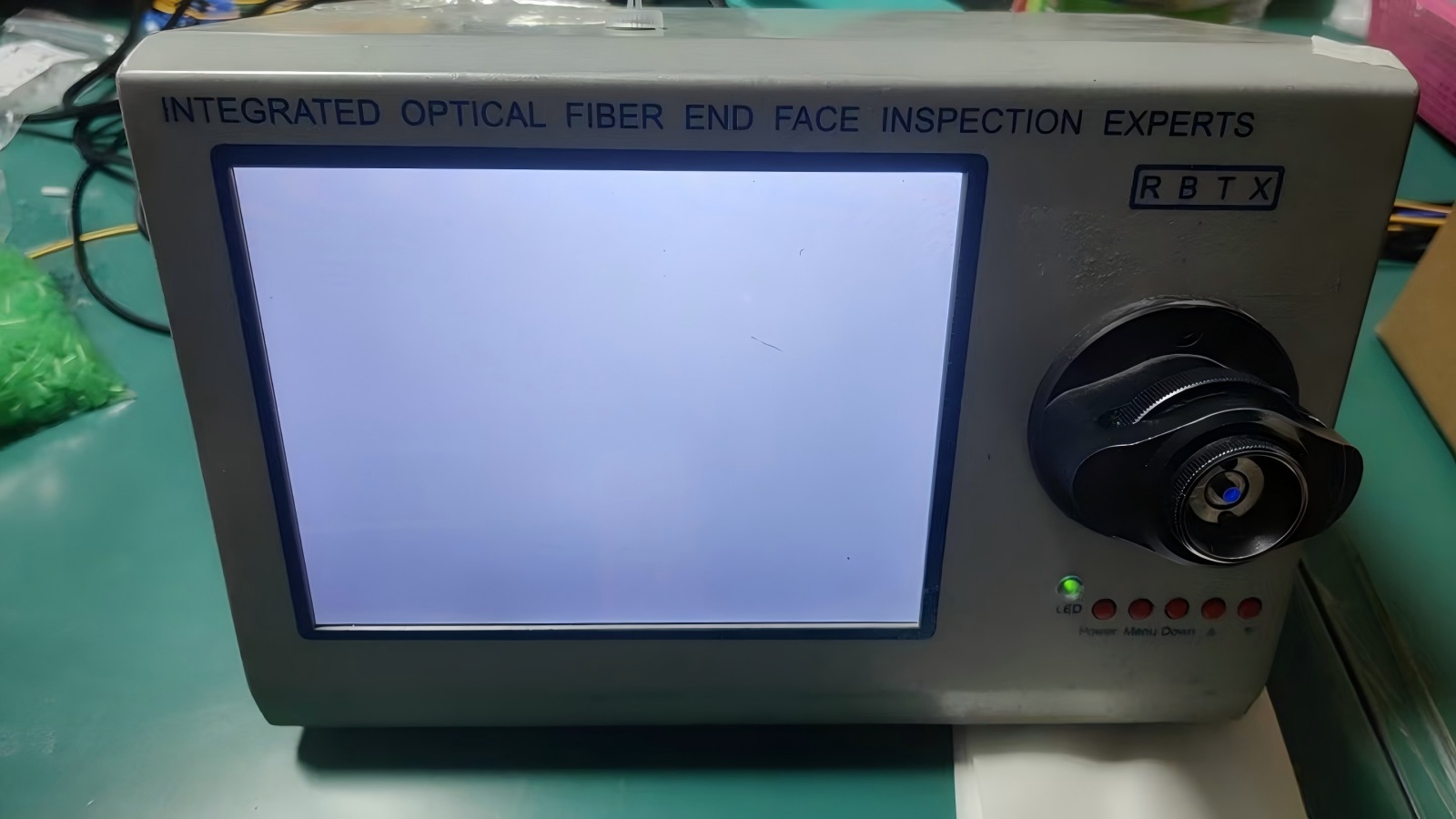
Quality is at the core of everything we do. We implement a comprehensive quality management system supported by incoming material inspection, in-process quality control, and final product testing. Every product undergoes rigorous testing using advanced optical and network performance analyzers before shipment. Our dedicated quality assurance team consists of 36 experienced inspectors who ensure that every product meets customer requirements and industry specifications.
As a company with a strong manufacturer and exporter background, we primarily serve customers across North America, Europe, Southeast Asia, the Middle East, and South America. To support diverse market needs, Equip-Link offers flexible customization services, including private labeling, custom firmware programming, compatibility coding, packaging customization, and OEM/ODM manufacturing.